Add 2-digit Numbers (Sum Under 100) — Grade 4
Practice adding 2-digit numbers with sums under 100 with free printable worksheets. Build fluency with mental math strategies for fourth graders.
Adding 2-digit numbers with sums under 100 is an important skill that helps fourth graders develop place value understanding and mental math strategies. These worksheets focus on problems like 23 + 29 = 52, where students learn to break numbers apart, handle carrying when needed, and add efficiently.
When teaching 2-digit addition with sums under 100, start with concrete examples. Show how to break each number into tens and ones, add the tens first, then add the ones (which may require carrying), and combine. This approach helps build understanding before transitioning to mental math.
Add 2-digit Numbers (Sum Under 100) Worksheets
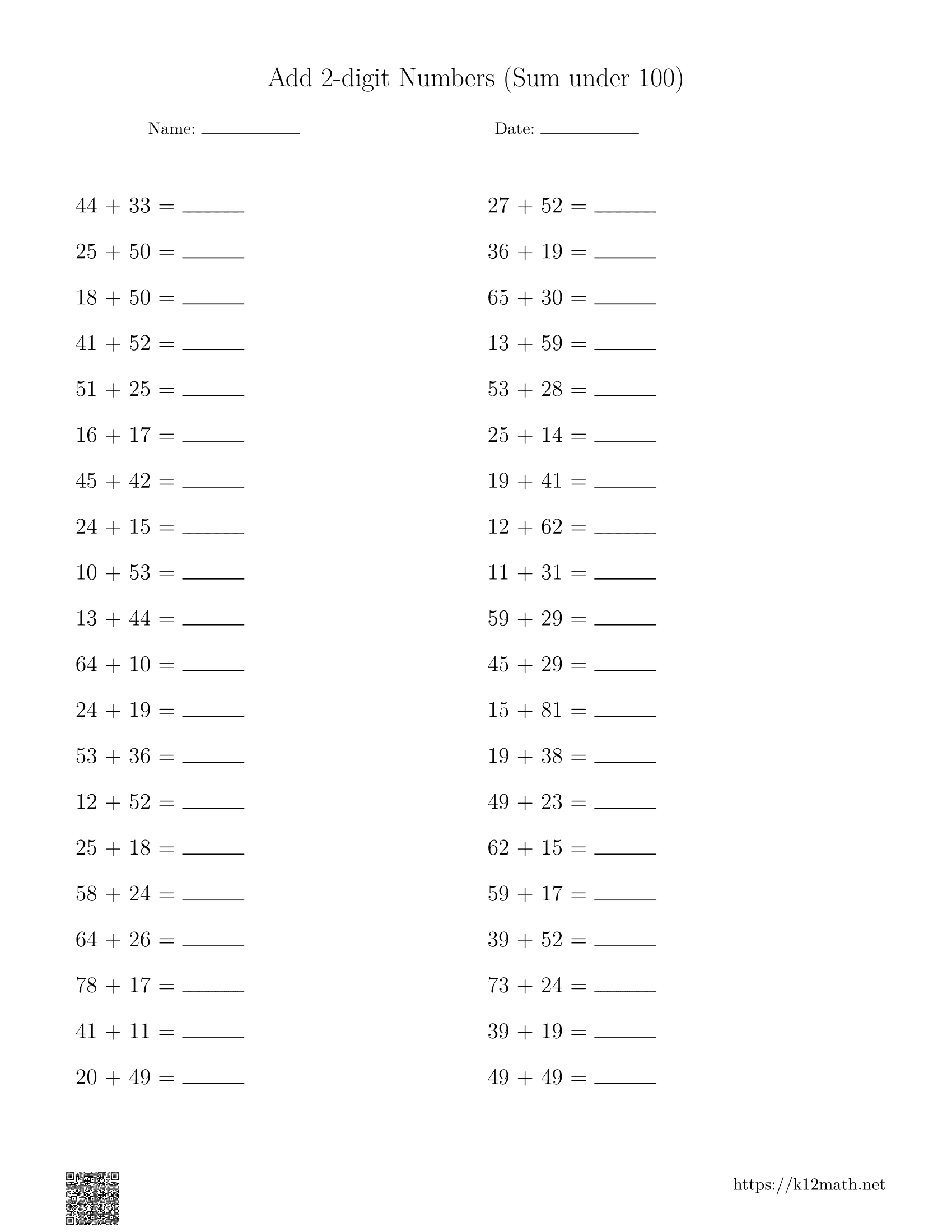
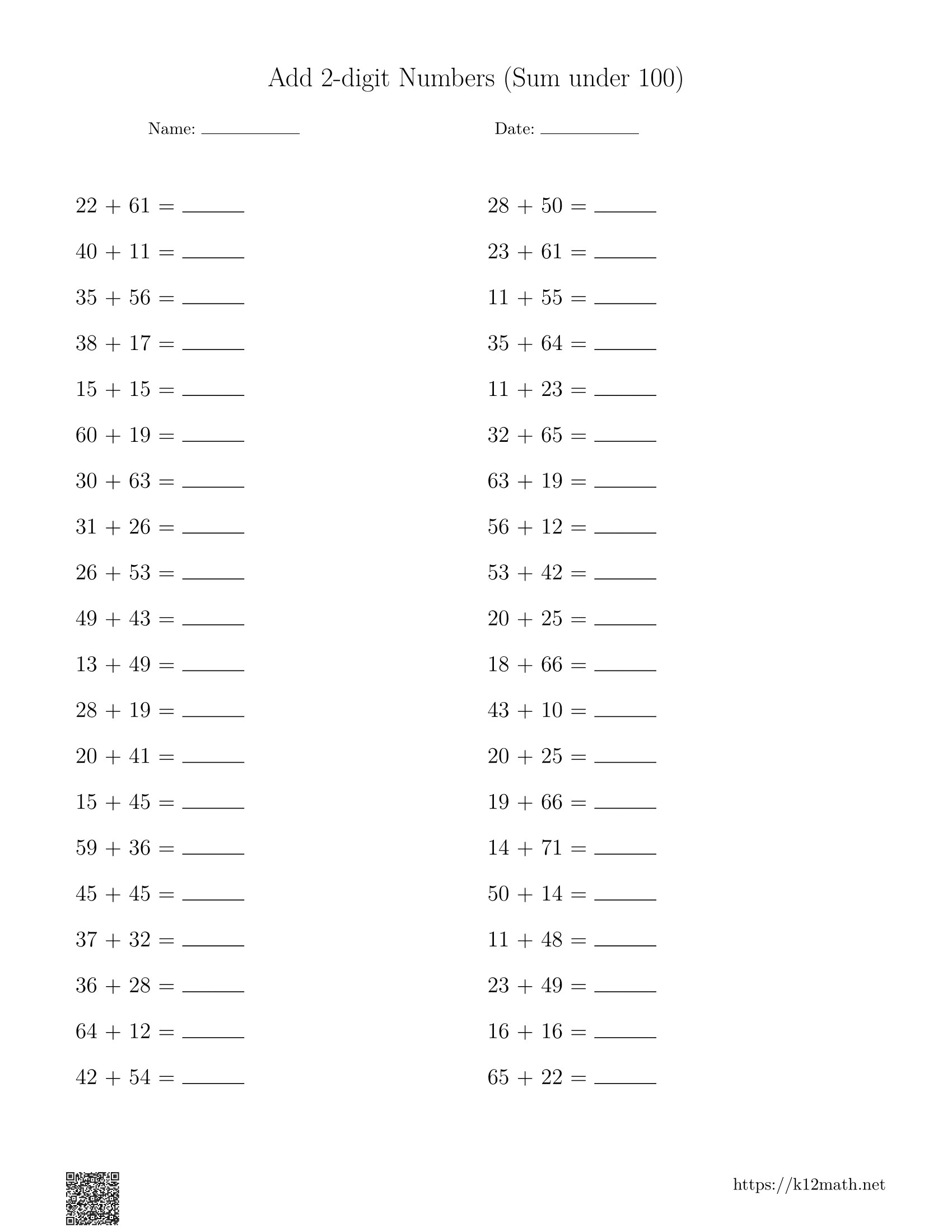
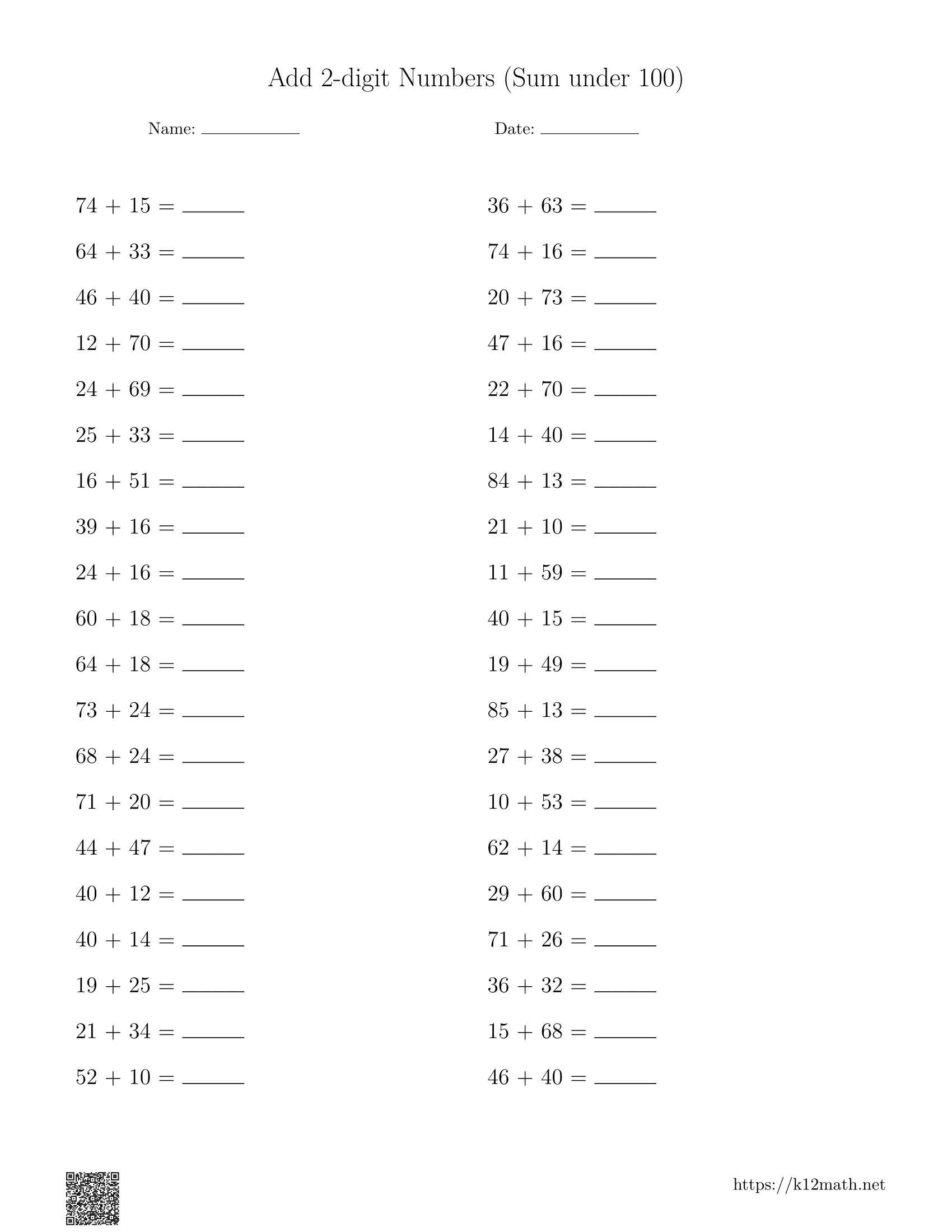
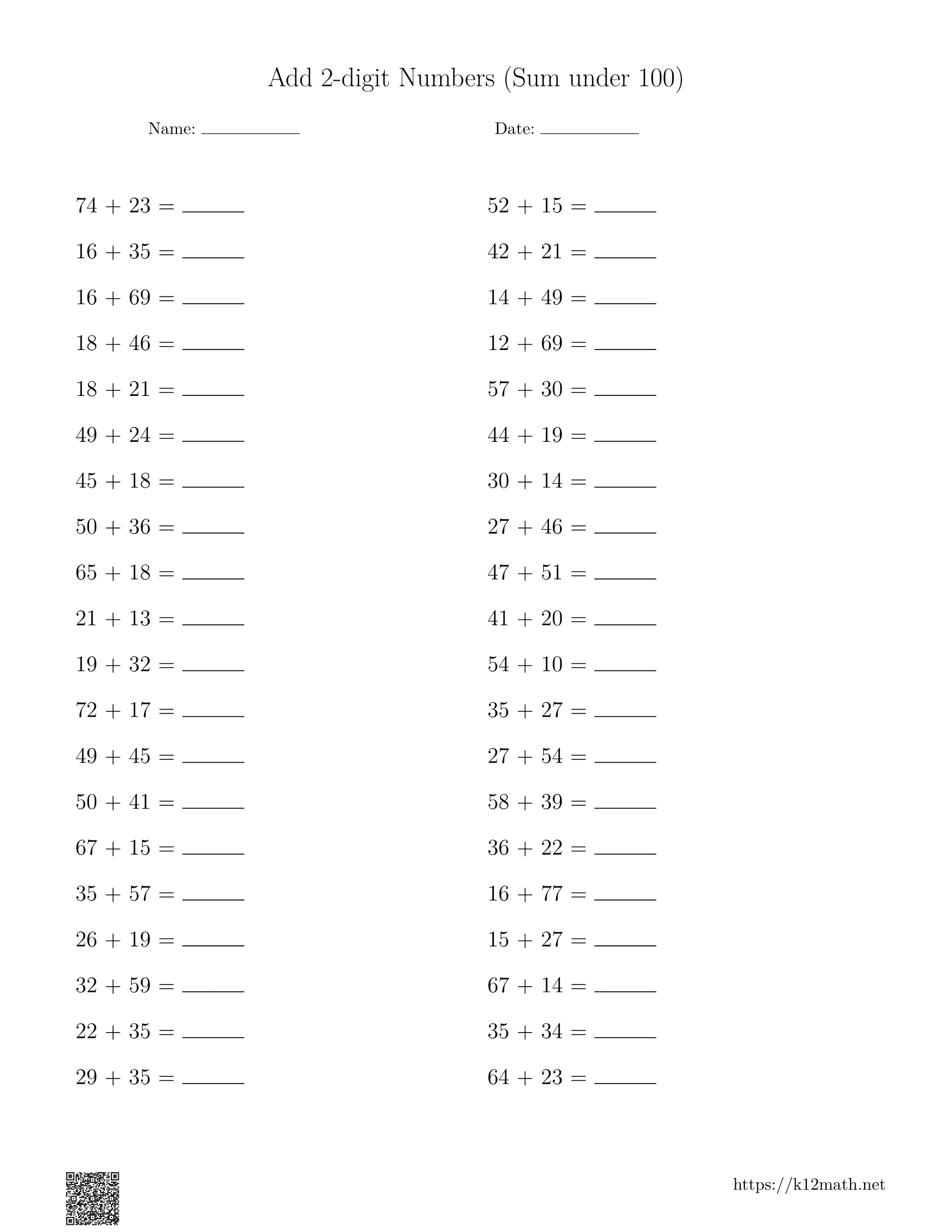
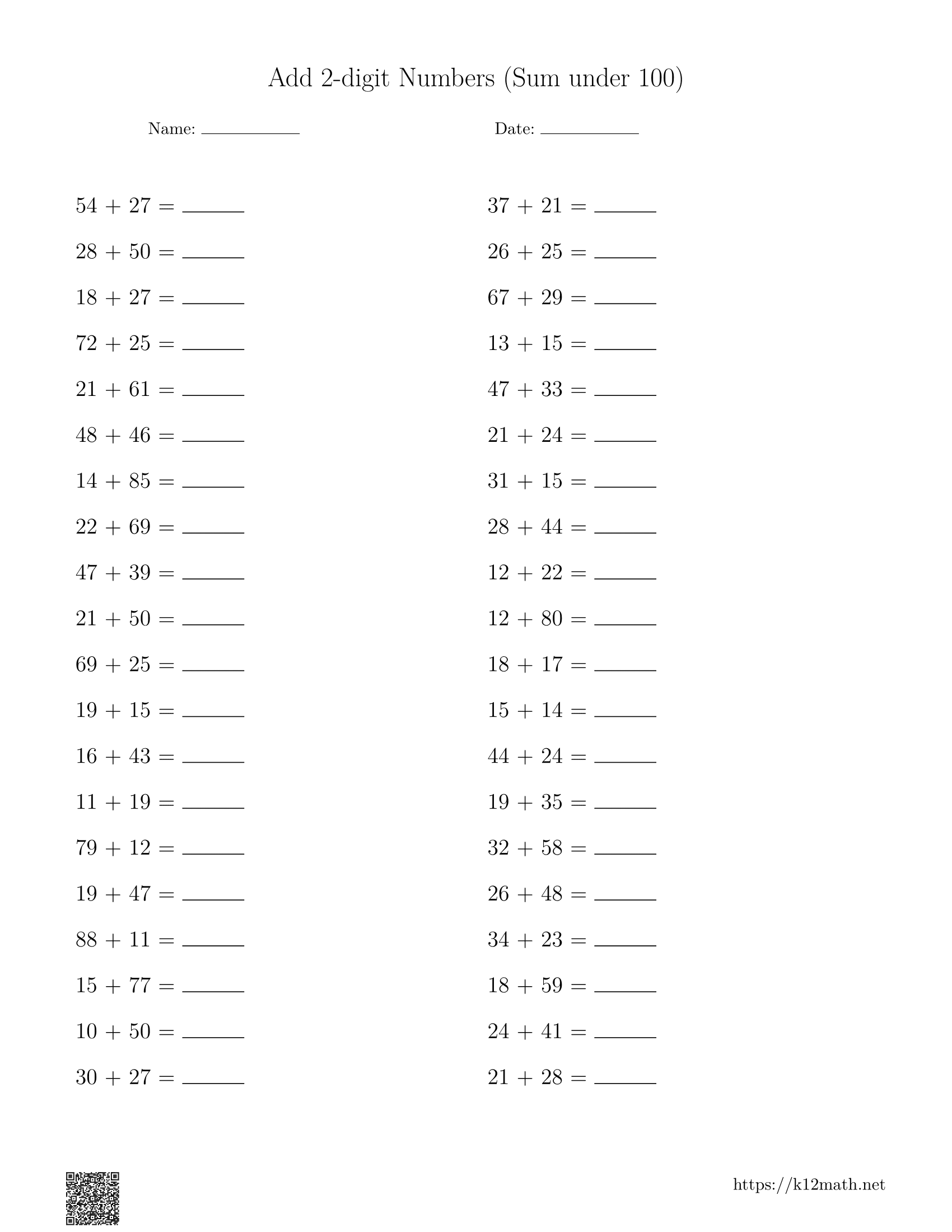
Practice adding 2-digit numbers with sums under 100 with visual support and answer keys.
Teaching Overview
When introducing 2-digit addition with sums under 100, begin with concrete examples. Use base-10 blocks or place value charts to show a problem like 23 + 29. Show 2 tens and 3 ones, then add 2 tens and 9 ones. Count the tens: 2 + 2 = 4 tens (40). Count the ones: 3 + 9 = 12 ones, which is 1 ten and 2 ones. So you have 4 tens + 1 ten + 2 ones = 5 tens + 2 ones = 52. This concrete experience helps students understand place value and regrouping.
Next, introduce the breaking apart strategy. Show how 23 + 29 can be thought of as (20 + 3) + (20 + 9) = (20 + 20) + (3 + 9) = 40 + 12 = 52. Emphasize that 12 ones equals 1 ten and 2 ones, so 40 + 10 + 2 = 52. Use number lines to visualize this: start at 23, jump 29, land on 52. Practice this repeatedly with different number combinations.
As students become comfortable, introduce mental strategies. Teach them to recognize when carrying is needed (when ones add up to 10 or more) and how to handle it efficiently. For example, 23 + 29: think 20 + 20 = 40, 3 + 9 = 12, so 40 + 12 = 52.
Finally, encourage students to check their answers by using subtraction or by breaking numbers apart differently. This self-checking habit builds confidence and reinforces place value understanding.